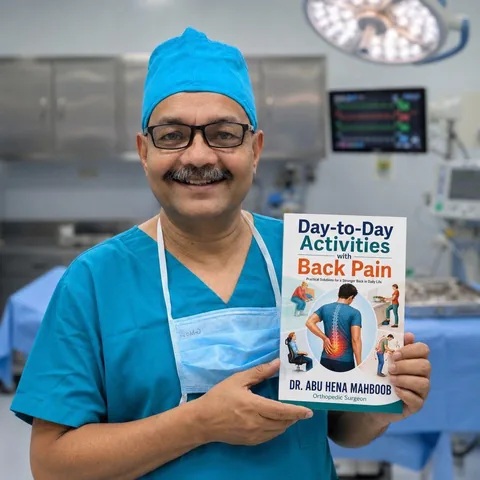
Crossing forty often brings a new awareness of our knees. In my clinic, I meet two kinds of worried patients almost every week. Some arrive alarmed by a harmless click on the stairs, convinced they are headed straight for the operating room. Others quietly endure years of swelling and sleepless nights, giving up evening walks and family gatherings because someone told them sore knees are simply an unavoidable tax of growing older.
Over roughly thirty-five years in orthopedic surgery, including arthroplasty fellowship training in New Delhi and decades teaching medical students, I have seen how reassuring clear information can be. Understanding what happens inside an aging knee helps you protect joint function early and recognize when specialist care truly matters.
What Is Normal After 40, and How Osteoarthritis Develops
First, let us clear up a common worry: noise alone is not disease. Soft clicking or popping when you bend your knee (what doctors call crepitus) is common after forty and is usually harmless when there is no pain, swelling, or catching. Likewise, feeling mildly stiff for two or three minutes after sitting through a long journey, then walking comfortably once you get moving, generally reflects ordinary joint stiffness rather than structural damage.
Osteoarthritis behaves differently. Rather than sudden mechanical rust, it is a gradual, whole-joint change. Over years, the smooth gliding cartilage covering the ends of the thighbone, shinbone, and kneecap softens and thins, the bone underneath remodels, and the joint lining becomes intermittently irritated. Typical early signs include aching on stairs, discomfort rising from low seats or floor squatting, morning stiffness that eases within twenty to thirty minutes, and mild puffiness after an unusually active day on your feet.
Why Body Weight Multiplies Inside the Knee
Many patients feel discouraged if they have ten or fifteen kilograms to lose, assuming modest changes will barely matter. Biomechanics tells a far more encouraging story. Because of how muscles and levers cross the joint, walking on flat ground places roughly three to four times your body weight across your knees with every single step, and descending stairs multiplies that load further. Turn that arithmetic in your favor: shedding even four or five kilograms removes fifteen to twenty kilograms of pressure from each knee on every stride, thousands of times each day. Reducing excess body fat also quiets low-grade inflammatory signals in the bloodstream that irritate sensitive joint linings.
The Overlooked Link Between Diabetes and Knees
Patients are sometimes surprised when an orthopedic surgeon asks about blood sugar, yet diabetes and knee osteoarthritis interact closely beyond body weight alone. Chronically elevated glucose fuels systemic inflammation and creates sugar-protein cross-links within cartilage, ligaments, and tendons, leaving joint tissues stiffer and more vulnerable to everyday wear. Diabetes can also weaken the protective thigh muscles, reduce sensation in the feet that helps cushion gait, and slow recovery after minor strains. Just as importantly, if a patient ever requires a joint procedure later in life, steady blood sugar control beforehand significantly lowers the risk of wound complications and infection. Looking after your metabolic health with your physician is direct protection for your knees.
Safe Exercise: Why Movement Nourishes Worn Cartilage
When a knee aches, resting on the sofa feels intuitive, yet prolonged inactivity quietly makes osteoarthritis worse. Joint cartilage has no blood vessels of its own; it depends on gentle, rhythmic loading and unloading, much like squeezing and releasing a sponge, to draw nourishment from joint fluid. Meanwhile, strong quadriceps and hip muscles act as living shock absorbers around the joint. Choose low-impact movement that builds strength without pounding:
- Level walking in cushioned shoes: Prefer flat paths or indoor tracks over steep downhill slopes while a knee is sensitive.
- Cycling and water exercise: Stationary bikes, swimming, and chest-deep water walking keep joints moving smoothly with minimal weight-bearing stress.
- Targeted muscle strengthening: Straight-leg raises, seated knee extensions, and gentle hip exercises stabilize the kneecap and joint line.
- The next-morning rule: Mild muscle effort during exercise is healthy, whereas increased joint pain or swelling the next morning means trimming duration or intensity rather than stopping altogether.
Pair exercise with small daily kindnesses to sore knees. During painful flare-ups, favor higher chairs with armrests over deep sofas or prolonged floor squatting, lead with your stronger leg going upstairs and your sore leg stepping down, and never let pride keep you from using a handrail or walking stick when needed.
When to See a Doctor
Do not wait out knee symptoms at home if any red-flag features appear. Seek prompt medical evaluation, and urgent care for sudden severe symptoms, if you experience:
- A knee that suddenly locks and cannot straighten fully, or repeatedly buckles beneath your weight
- Rapid swelling, an audible pop, or inability to bear weight following a twist or fall
- A joint that turns hot, red, and tensely swollen, especially with fever or chills, which requires urgent assessment to rule out infection
- Visible new deformity, or calf pain and swelling below the sore knee
- Morning stiffness lasting longer than thirty to sixty minutes across multiple joints, which may point toward inflammatory arthritis
When Joint Replacement Enters the Conversation
One lesson I always emphasize to young doctors in medical college is simple: we treat the patient in front of us, never the X-ray alone. Plenty of adults over fifty have X-rays showing narrowed joint space yet walk comfortably with exercise, weight management, supportive footwear, walking aids during flare-ups, and physician-guided non-surgical care. Seeing arthritis on a film is not an automatic ticket to surgery.
Partial or total knee replacement enters the conversation thoughtfully when two realities meet: imaging confirms substantial loss of joint cartilage, and your everyday life remains unacceptably limited despite a genuine, sustained trial of conservative treatment. When pain wakes you night after night, shrinks your walking distance to a few short blocks, or threatens your independence, sitting down with an experienced orthopedic surgeon makes good sense. Modern arthroplasty is not a promise of an indestructible twenty-year-old knee, and it requires committed rehabilitation afterward, yet for carefully selected patients at the right stage, it remains one of medicine's most reliable ways to ease severe arthritic pain and restore daily mobility.
This article is for general health education only and does not replace an individual medical examination, diagnosis, or advice from your physician or orthopedic surgeon.
This article is for general education only and is not a substitute for professional medical advice, diagnosis or treatment. Please consult a qualified physician about your own situation.